
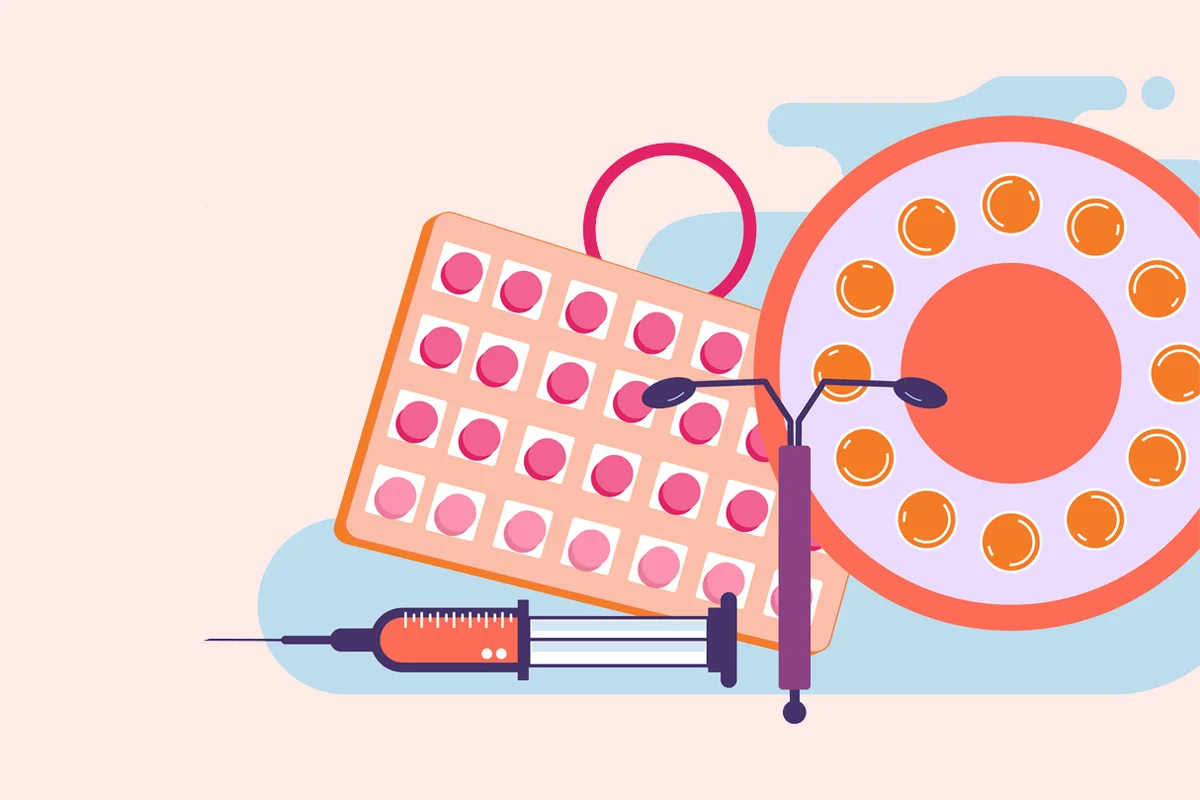
Hormonal birth control isn’t without side effects. As with all drugs, there are beneficial effects and potential risks that affect everyone differently.
Most believe that hormonal birth control serves one purpose: to prevent pregnancy. While hormonal birth control is very effective compared to barrier and lifestyle methods, the effects aren’t just limited to pregnancy prevention.
Each type has similar benefits and risks, although everyone responds differently to the hormones.
If you’re interested in birth control, talk with a healthcare professional about which type is most effective for you. Effectiveness is based on how consistent your birth control use is.
Common changes
Written by Tess Catlett and illustrated by Andrew Nguyen
Mental and emotional side effects
Anxiety
A 2004 review found that hormonal birth control users experienced higher levels of anxiety compared to non-users. Similarly, a 2018 study revealed that people using hormonal IUDs also had increased rates of anxiety.
Combined pills, which contain synthetic versions of estrogen and progesterone, and progestin-only minipills are generally linked with higher rates of depression and anxiety compared to other methods.
Between 4% to 10% of users report negative mood changes while using the combined pill. Still, most users are satisfied with the pill.
In fact, a review of studies conducted over the past 30 years found that the majority of users of combined hormonal contraceptives — including the pill, patch, and vaginal ring — experienced either no change in mood or a positive effect.
Depression
A 2023 study found that pill users may face up to a 130% increased risk of depression, especially during the first 2 years of use.
One of the largest studies on this topic was conducted in Denmark in 2016. Researchers analyzed 14 years of data from over 1 million women ages 15 to 34, excluding those with a history of depression or antidepressant use.
Researchers used this data to estimate that 2.2% of people who start using hormonal birth control are prescribed antidepressants within a year, compared to 1.7% of people not using hormonal contraception.
People with hormonal IUDs were found to be 1.4 times more likely to be prescribed antidepressants than those not using any hormonal birth control, with the risk being higher for users ages 15 to 19.
However, other research has not found a consistent link between hormonal birth control and depression.
A 2018 review of 26 studies on progestin-only birth control, including 5 studies on hormonal IUDs, found that only 1 study linked hormonal IUDs to an increased risk of depression. The other 4 studies found no such association.
Stress
A 2023 study found that the pill may impair your stress response, making it harder for your body to adapt to stress.
The study also found that pill users have elevated levels of the inflammatory cytokine TNF-alpha before and after a stress test, which might be linked to a more “male-typical” stress response.
In contrast, users with natural menstrual cycles showed higher levels of interleukin-6, a cytokine associated with a more “female-typical” response to stress.
The pill may reduce the body’s production of progesterone, which is converted into allopregnanolone, a hormone known for its calming effects.
Physical side effects
Sleep-wake cycle and circadian rhythm
The pill might impact your sleep-wake cycle due to its effect on estrogen, which helps regulate your circadian rhythm or internal 24-hour clock.
Disruptions to your circadian rhythm can influence various aspects of daily functioning, including sleep patterns, hormone levels, eating habits, digestion, and body temperature.
Research indicates that disturbances in this internal clock can increase the risk of anxiety and depression.
Headaches and migraine
Research has shown a link between hormonal birth control, headaches, and migraine episodes.
Estrogen changes throughout your cycle can trigger menstrual migraine. Hormonal birth control can alter your natural estrogen levels, potentially leading to headaches.
If you have a history of migraine with aura, your healthcare professional may advise against combined birth control. Higher estrogen levels may increase your risk of stroke.
Weight gain
Some hormonal methods may be associated with slight weight gain over several years of use. This includes the following:
- combined pill
- IUD
- implant
- shot
Menstrual side effects
Cycle
Hormonal birth control interferes with ovulation. Ovulation usually occurs halfway through your menstrual cycle when an ovary releases an egg into a fallopian tube to prepare for fertilization.
If an egg is not released or fertilized by sperm, pregnancy cannot occur. The uterine lining sheds, leading to menstruation, which marks the start of a new menstrual cycle.
Simply put, menstruation can’t occur without ovulation. However, many people experience period-like bleeding — commonly known as breakthrough or withdrawal bleeding — in place of menstruation.
Breakthrough bleeding
A 2016 review found that 30% to 50% of combined pill users experience breakthrough bleeding in the first 3 to 6 months of use. This drops to 10% to 30% percent by the third month.
Breakthrough bleeding is more likely with continuous or extended-cycle pills. It’s also the most common side effect of the progestin-only minipill.
Although breakthrough bleeding is more commonly associated with the pill, all hormonal methods can impact the timing, amount, and duration of period-like bleeding. These effects typically lessen with time.